Outdoor Hoods for Covered Patio Kitchens
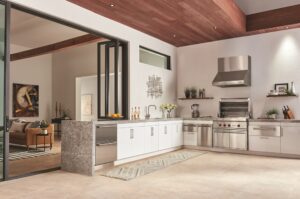
Having a roof over a patio helps with outdoor cooking, but the roof alters the movement of smoke, heat, and grease through the space. For this reason, outdoor hoods need to be considered early in the plans whenever grills or other high-heat cooking appliances are placed under a patio cover or near a wall. If a cooking station is fully or partially enclosed under a solid structure, plan for an outdoor-rated hood and confirm the design with the appliance manufacturer, local authorities, and licensed professionals. An open-air grill may not need the same type of system, but its placement should be evaluated thoroughly as well.
Why Covered Patios Change Outdoor Kitchen Ventilation
When a grill is uncovered, smoke and heat escape into the surrounding air. However, when using a solid pergola or patio cover, smoke and heat start to rise, but won’t leave the cooking area quickly and instead will spread across the ceiling.
This means that smoke can settle on doors, windows, and even on dining and lounge seating. Airborne grease can settle on ceilings, beams, walls, cabinets, and surfaces.
Proper outdoor kitchen ventilation helps to manage cooking air and move it through a designed duct path to ensure a safe distance. It also creates a more comfortable space for both the cook and the guests, especially for long cooking and dining sessions.
What the Patio Structure Changes
Not all covered spaces have the same impact on the surrounding environment. A solid roof, a louvered cover, a pergola with added shading, and an open-sided roof all affect the movement of air differently.
The planning team should review:
- How much of the cooking area is covered
- The number and position of open sides
- Ceiling shape, roof height, nearby walls, windows, and doors
- Common wind direction around the property
- Dining areas and the type and number of cooking appliances
An open site may feel open, but behavior may change when furniture, cabinets, and other equipment are added. This is why outdoor hoods and the full cooking zone should be planned prior to the construction of the patio and cabinets.
Outdoor Hood vs. Open-Air Grill Placement
An open-air grill that is set away from overhead structures may allow for easier passage of heat and smoke. Regardless, the grill can’t be placed just anywhere without considering the manufacturer’s installation instructions, the surrounding materials, the property design, and applicable regulations.
A covered patio outdoor kitchen requires additional consideration because roofs and walls can trap cooking air in the space. As a result, a hood may be one of the design’s primary features, rather than accessory added at the end.
Open-Air Placement
When the grill has space overhead and located away from doors, windows, passageways, and guest seating, an open-air arrangement can be effective. Potential disturbances from the wind, fuel line connection requirements, and the grill’s cabinet and clearances must be considered.
Covered Cooking Stations
A hood must work with the grill and surrounding framework. The designer must consider the position of the hood, the layout of the ducts, the flow of air into the space, and the accessibility of the area for maintenance.
The cooking line should also be located away from the direct path leading from the house to the dining table and the pool. This design choice minimizes congestion around hot equipment and keeps serving traffic out of the cook’s work area.
When comparing outdoor barbeques and deciding on grills and cooking options, homeowners need to understand how different options affect the entire setup. Grills, side burners, griddles, smokers, and pizza ovens come with different combinations of heat, smoke, steam, and grease. So, each product needs its own review.
Sizing, Capture Area, and Duct Path
Good built-in grill ventilation involves a lot more than just choosing a hood that looks sufficiently wide. It involves the hood, grill, blower, duct system, patio cover, and air supply all need to work together.
The width, depth, mounting height, airflow, and clearance change based on product and manufacturer specifications. Be sure to check the most recent manufacturer specifications and installation instructions for the grills and hoods you’re using.
Hood Width and Depth
Smoke and grease collect at the hood capture area. Dimensions of the capture area should be determined by the guidelines of the cooking appliance manufacturer. The designer also considers factors such as crosswinds, exposed sides, nearby walls, and hood projections.
Mounting Height
Mounting height impacts capture and safe use, and while a standard height does not suit every outdoor kitchen, the appliance documentation and hood documentation should be used in conjunction with one another, and the final position should be checked before any framing, stone work, or cabinet work is done.
Blower and Duct Planning
Blower must match the approved hood and cooking equipment. The length of the duct, the number and degree of bends, the point of discharge, and the particular arrangement of the blower can affect system performance. Therefore, plan the duct layout prior to the installation of the ceiling and in accordance with the manufacturer’s instructions and local code requirements.
High-end brand categories such as Hestan outdoor ventilation and Lynx outdoor ventilationshow that there are great purpose-built options for outdoor ventilation. One of the best ways to narrow down your options is by looking at the product specs and installation documents. These documents provide customers with the required dimensions and the specs for approved pairs and blower options, with other model-specific details.
Questions to Confirm Before Ordering
- Is the hood approved for outdoor use and the chosen cooking setup?
- Does the hood provide the capture area required by the manufacturer?
- Which blower options are allowed for that model?
- Can the duct follow an approved route to a suitable outdoor termination point?
- Is there safe access for cleaning and future service?
- Have utility, fire-safety, and building needs been reviewed by the right professionals?
These answers should be confirmed from product documents to get written answers. Check with local authorities to see what local code requirements and permits may apply.
Materials and Weather Exposure
Just because a kitchen hood works inside doesn’t mean the same model works outside. A true outdoor range hood is specifically designed and tested to function effectively in outdoor environments. However, even equipment that is rated for the outdoors also needs to be positioned and cared for properly.
Outdoor-rated stainless steel is suitable for various patio designs, but it still requires care and maintenance. The level of maintenance that the steel needs depend on how much the steel is exposed to the elements.
Coastal and Southern California Conditions
Outdoor entertaining in sunny Southern California can leave appliances exposed to the sun, dust, moisture, and even pool chemicals. Homes that are closer to the ocean may need a more intensive cleaning plan, because salt and moisture can be even more damaging to metal surfaces.
Follow the manufacturer’s care instructions for the specific finish. In general, the surface can be protected by quickly blotting grease, doing light cleaning, rinsing when instructed, and drying completely. The wrong cleaning tools or cleaning products may damage its appearance.
Cleaning and Service Access
Hoods should be designed to make everyday maintenance easy. Parts such as filters or baffles, grease trays, lights, and other removable components should be easy to remove to allow for effective cleaning.
The design should make it easy for service professionals to access the blower, controls, electrical connections, and duct when needed. If access is blocked by a beautiful enclosure made of stone, tile, or wood, that enclosure has become a problem.
Before approving the finish plan, ask:
- Which parts require regular cleaning?
- Which cleaning products and tools are approved?
- Will rain or irrigation water reach the hood or its controls?
- Can filters and service points be reached after the patio is finished?
Outdoor Kitchen Workflow Around the Hood
Design the hood as a part of the whole luxury outdoor kitchen. It shouldn’t be a piece added above the grill. The best layouts include all elements of cooking, prep, and cleanup, and they feature a space for guests to converse without going through the hot zone.
Build a Clear Cooking Zone
Place landing and prep space as close to the grill as is safe and reasonable. Hot appliances should be grouped only when product requirements, hood coverage, and cabinet design allow it.
A BBQ hood needs to serve the setup it was designed for. If a side burner, griddle, smoker, or any other appliance is added later, the ventilation plan must be reviewed. Don’t assume the original hood can deal with the addition.
Keep Cold Storage Useful but Protected
Outdoor refrigeration reduces trips into the house, but be careful of heat from the grill and heavy cooking traffic. Look at the refrigeration’s outdoor rating, ventilation openings, utility requirements, and cabinet details before you decide on the placement.
The beverage center can be placed closer to the guests and food storage can be best close to the food prep area. Please ensure that guests do not have access to the cook’s area.
Plan Serving and Seating Around Airflow
Ensure you have a place to put cooked food ahead of reaching the dining table. Seating should be placed away from the grill to minimize the amount of heat and smoke and reduce the noise and cooking smell around guests.
Also check the view from the seating area. The hood can be a great design feature, but size, surrounds, ceiling connections, and duct covers should all be considered in balance with the structure.
Covered Patio Planning Comparison
| Decision Factor | Option A | Option B/Alternative | Planning Note |
| Structure | Covered patio or solid roof | Open-air cooking area | A cover changes how smoke and heat move, so plan early. |
| Cooking appliance | Built-in grill | Side burner, griddle, smoker, or pizza oven | Each appliance has a different heat and smoke profile; use its specifications. |
| Hood design | Width and depth | Blower and duct setup | All parts affect capture; do not use guessed airflow values. |
| Material | Outdoor-rated stainless steel | Other approved outdoor finishes | Verify the product’s outdoor rating and care guide. |
| Layout | Prep and serving zones | Seating and guest paths | A clear workflow improves comfort and safety. |
Comparing grills, outdoor appliances, and outdoor hoods at Universal Appliance and Kitchen Center is easier. Our appliance experts can help determine the best scales, finishes, controls, and cabinet layouts based on each household’s cooking style during your visit to the showroom.
Frequently Asked Questions
Do covered outdoor kitchens need an outdoor hood?
Outdoor rated hoods are typically needed for covered cooking areas since the patio roof can trap smoke, heat, and grease. Moreover, the answer may vary for each individual, so please review the appliance, the construction, the manufacturer instructions, and the local regulations.
Can an indoor range hood be used outside?
Do not use an indoor range hood outside unless the manufacturer authorizes that specific model for outdoor use. Use range hoods rated for the intended use and adhere to the installation, service, and maintenance instructions.
How big should an outdoor hood be?
There is no standard size. It depends on the cooking appliance, the hood and its design, and the specific instructions of the manufacturer. Size (width, depth, height), blower and duct requirements must be verified for the specific models.
Where should a grill go under a covered patio?
A grill must be located where the approved hood and duct can do their job, and where smokes and heat can be directed away from doors and windows, and away from guest seating and pathways. Verify all clearances, and all construction, fuel and electrical requirements, and local regulations.
Plan Your Outdoor Kitchen With Universal Appliance and Kitchen Center
The covered patio design combines the hood, grill, refrigerator, prep, and serving areas, along with the seating, materials, and services. The advantage of making these choices first is to avoid conflicts in the layout and design a functional space for cooking that is neat and refined.
Explore UAKC.com for some of the most stylish high-end appliances and plumbing fixtures available, or visit or contact Universal Appliance and Kitchen Center’s friendly and knowledgeable staff to get assistance in choosing the perfect design and finishes for your cabinetry that best suit your household’s needs.
While your professional design and installation team take care of the technical aspects and requirements of your project, the Universal Appliance and Kitchen Center team can help you put everything together.
- Outdoor Hoods for Covered Patio Kitchens
- Column Freezers vs Upright Freezers
- Hood Inserts vs Statement Range Hoods
- Quiet Dishwashers for Open-Concept Luxury Kitchens: dBA Ratings, Drying Systems, and Panel-Ready Design in 2026
- Dual-Fuel vs. All-Gas Ranges: Which Cooking Performance Matches Your Style?
- Reimagining the Kitchen Layout: The Ultimate Guide to Column Refrigeration
- What Is a Speed Oven? Why This Hybrid Appliance Redefines Luxury Kitchen Architecture
- Professional Style Ventilation: How to Calculate CFM and Choose the Right Range Hood Layout
- French Door Wall Oven vs. Drop Down Oven: Elevating Your Luxury Kitchen Layout
- Speed Oven vs Microwave Combo Choices: Upgrading Your Luxury Kitchen Appliance Layout