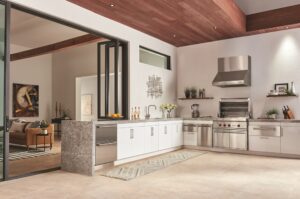
Outdoor Hoods for Covered Patio Kitchens
Having a roof over a patio helps with outdoor cooking, but the roof alters the movement of smoke, heat, and grease through the space. For this reason, outdoor hoods need to be considered early in the plans whenever grills or other high-heat cooking appliances are placed under a patio cover or near a wall. If a cooking station is fully or partially enclosed under a solid structure, plan for an outdoor-rated hood and confirm the design with the appliance manufacturer, local authorities, and licensed professionals. An open-air grill may not need the same type of system, but its placement should be evaluated thoroughly as well. Why Covered Patios Change Outdoor Kitchen Ventilation When a grill is uncovered, smoke and heat escape into the surrounding air. However, when using a solid pergola or patio cover, smoke and heat start to rise, but won’t leave the cooking area quickly and instead will spread across the ceiling. This means that smoke can settle on doors, windows, and even on dining and lounge seating. Airborne grease can settle on ceilings, beams, walls, cabinets, and surfaces. Proper outdoor kitchen ventilation helps to manage cooking air and move it through a designed duct path to ensure a safe distance. It also creates a more comfortable space for both the cook and the guests, especially for long cooking and dining sessions. What the Patio Structure Changes Not all covered spaces have the same impact on the surrounding environment. A solid roof, a louvered cover, a pergola with